

From Reading the Gospel to Living It
A Review of the Book, Journey with Jesus: A Matthean Perspective
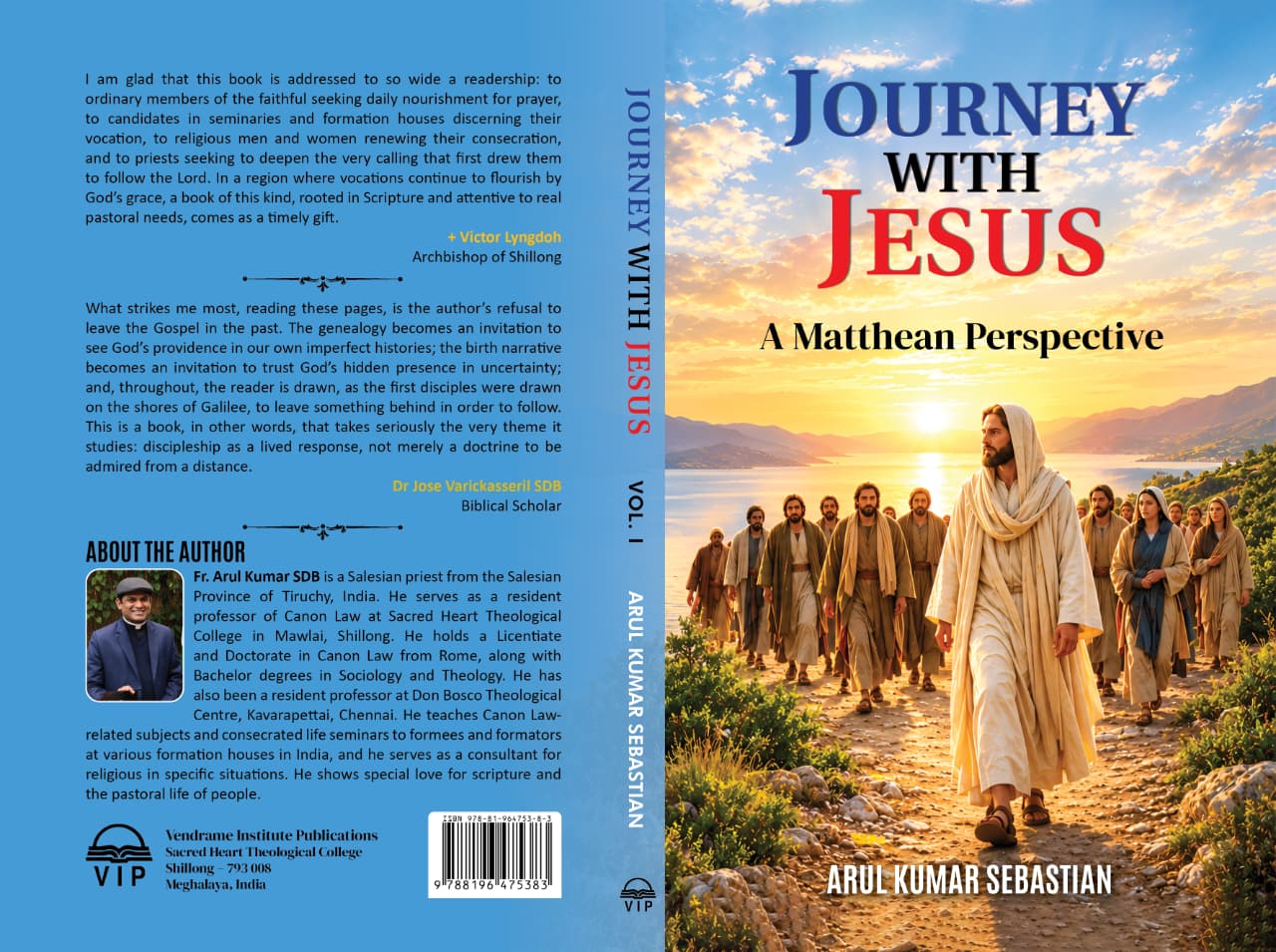
The value of a spiritual book lies not simply in what it explains, but in the quality of attention it brings to faith and life. Journey with Jesus: A Matthean Perspective, by Rev. Fr. Dr Arul Kumar Sebastian, Professor at Sacred Heart Theological College, Shillong, presents a thoughtful approach to this task. Drawing on seventy-two selected themes from the Gospel of Matthew, it invites readers to recognise that understanding Jesus' words and responding to them are part of the same journey of discipleship.
The origins of the work give it a particularly meaningful foundation. Beginning in 2019, during his doctoral studies in Rome, the author developed a discipline of reflecting daily on the Gospel passages proclaimed in the liturgy. The book thus emerges from the meeting of academic formation, prayer and pastoral concern. Its guiding intention is commendable: to help readers encounter Scripture as a living word that addresses the circumstances and responsibilities of everyday life.
One of the book’s strongest features is its clearly conceived structure. Each reflection begins with a thematic title and a key biblical verse, then presents three or four theological and pastoral considerations. “Questions to Ponder” invite personal reflection or shared discussion, while a concluding prayer provides a devotional culmination. This progression offers a practical framework that guides readers from attention to the text to a considered response in their own lives.
The questions deserve particular appreciation. A spiritual reflection can leave readers comforted without necessarily challenging them. Questions that invite honest self-examination add a more demanding dimension: they ask what the Gospel requires of the reader. This feature gives the volume considerable potential for use in parish groups, religious communities, classrooms and retreats, as well as in personal prayer.
Choosing Matthew provides a fitting foundation for such an undertaking. The presentation of Jesus as the fulfilment of the Law and the Prophets, the authoritative teacher and the one who calls disciples to a radical way of life offers rich possibilities for sustained reflection. The book’s stated concern with family responsibilities, struggles for meaning, questions of faith and social challenges reinforces its pastoral purpose. It encourages readers to bring their actual lives into conversation with the Gospel.
A fair critical assessment must also recognise the limits the author explicitly sets. This is neither an exhaustive commentary nor a technical exegetical study. Readers seeking sustained discussion of historical contexts, disputed interpretations or the literary development of every chapter will need additional resources. Its thematic selection also means that it is best read alongside Matthew’s Gospel itself, so that individual reflections remain connected to the wider narrative.
These boundaries do not diminish the value of the undertaking; they clarify how it can be used most fruitfully. The more significant challenge for a work of this kind is to ensure that practical application preserves the distinctive demands of the biblical passage. Similarly, a consistent format provides welcome guidance, although readers will benefit from resisting the temptation to treat each reflection as a routine exercise. The book invites patient engagement, allowing the Gospel to question familiar assumptions while strengthening faith.
The Khasi translation by Ms Virginia Mawlong adds an especially valuable dimension to the work. It widens access to these reflections and enables Khasi-speaking readers to engage with them in the language of their daily relationships, prayer and community life. In the pastoral setting of Northeast India, this is a substantial contribution. The forewords by Most Rev. Victor Lyngdoh, Archbishop of Shillong, and Rev. Fr Dr Jose Varickasseril, SDB, professor of Biblical Theology, further situate the volume within a community of ecclesial and biblical reflection.
Journey with Jesus: A Matthean Perspective deserves a warm welcome as a purposeful resource for Christian formation. Its combination of selected Scripture passages, theological reflection, searching questions, and prayer helps students, teachers, catechists, clergy, religious, and lay readers. Its central invitation is both simple and demanding: to let familiarity with the Gospel mature into a more attentive, prayerful and generous following of Jesus. The book is available on Amazon and can be purchased via the link below. https://amzn.in/d/01t9fmrk